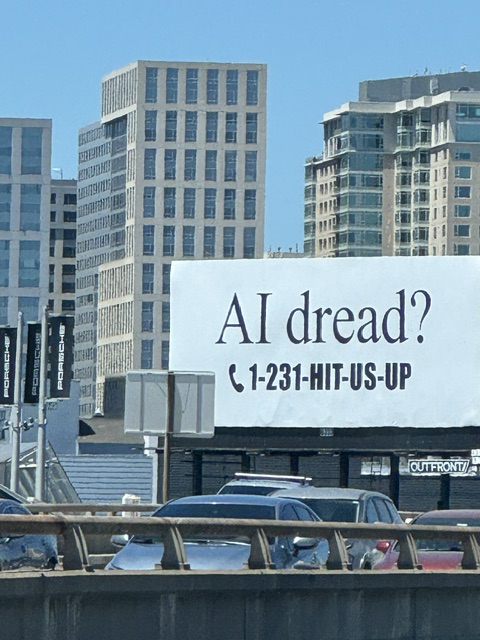
On my first research visit for The Translator After AI, I came upon two perfect bookend images and managed to get a picture of each. First, “AI Dread,” which I was able to snap even while behind the wheel because traffic was completely stopped. I assume the phone number and invitation is for counseling, and in the Bay Area, which is in the midst of the new AI tech boom, this is both real and needed. People are struggling.
But there are also aspirations all around that, like most good things, take time and effort to come to life. This is a shout out to Olivia Sears, whom I met in the living room of Michael and Priscilla Heim’s Los Angeles home in I want to say 2002, but long-time ALTA conference attendees who remember when the Pasadena conference was held will be able to verify the date. Olivia has been working on one of those long-term dreams for some 26 years.
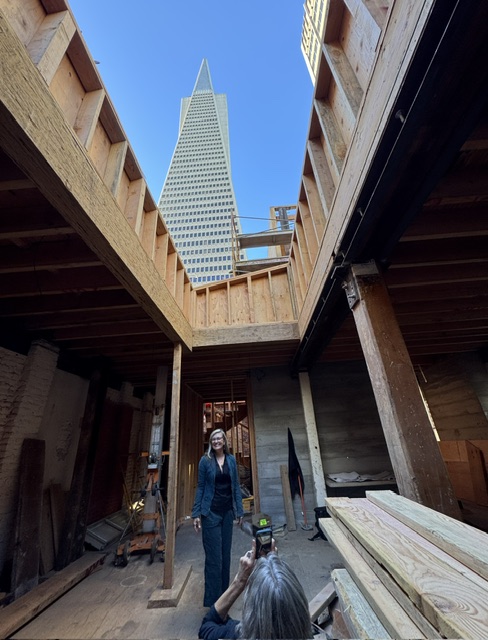
The Center for the Art of Translation is in the midst of creating a physical home. So the other photo is of Olivia, who founded CAT as a nonprofit in 2000 and has been steadily building towards this actual building ever since. Here she is standing amid the two-by-foors on the top floor under what will be a skylight window with quite a view up and up some more. Such an appropriate image!
She and her team, including Michael Holtmann as President of CAT, have been working hard on all its many activities, which includes fundraising for the impressive new space. If you’re inclined to help, here’s how.
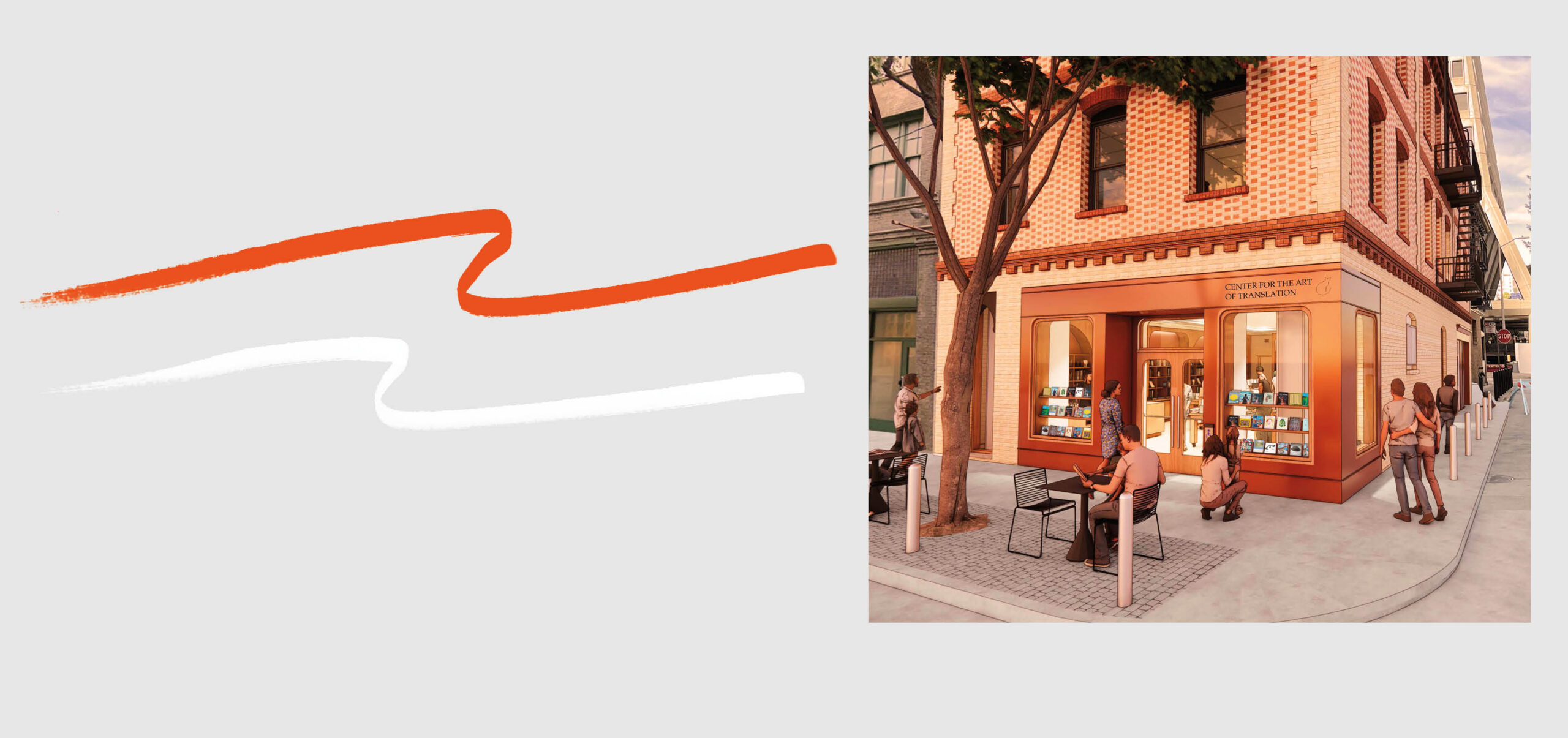
The community aspects of this and CAT’s other initiatives run deep, from physical book publishing, book launches, and readings, to K-12 educational work that introduces translation to kids. I first learned about “Poetry Inside Out,” one of CAT’s signature programs, at an ALTA conference at least twenty years ago and have been impressed ever since. You can find more on it here.
My next stop is Tokyo, where I’ll be meeting with faculty at two universities and talking about how translation practice is developing under AI pressures. I mentioned Tom Gally in some of my earlier posts (here, for example), and while his current project is not translation-focused, it does have direct bearing on how AI might play a role in humanities and qualitative social science research. Here’s a 20-minute video in which he explains his most recent experiment. And here’s a write up of what he describes in the video.
###

