During the breaks at the ALTA conference in Tucson at the beginning of November, I found myself often answering questions about my Sea of Intimacy. This makes a lot of sense, as it was at the ALTA in Tucson in, I want to say 2021, that I first spoke about it with friends there, sitting around a table at lunch. Four years later, they were checking in.
This time I mentioned one of the rabbit holes I’d recently found myself falling into, dug by Frederic II’s love of falconry, his book On the Art of Hunting with Birds, some of his favorite falconing spots in Puglia, and the association that his court created of the raptor with the emperor. I’ve found its subsequent history and iconography both rich and compelling, and I don’t want to say too much about it here, because I haven’t seen other treatments about what I’ve found. I’ll save it for the book.
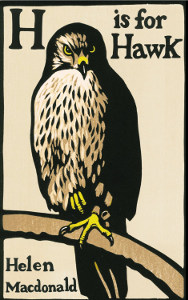
But ALTA is amazing for such conversations, and it was again this year, as my friend Diana Thow recommended Helen Macdonald’s H is for Hawk (published by Jonathan Cape in 2014). Now I find a film adaptation has been made and was just released this month somewhere in order to qualify it for the awards. A wider release is planned for January 2026. And while critics seem to like the film version, the book is what I read, and Diana didn’t say much about it. Only that she thought I might like it based on what I’d been saying to her as we sat in the hotel lobby. And there was a look in her eye, and an edge to her voice, that said she liked it very much indeed but wasn’t going to say more. Saving it for the book most likely.
I just finished it. And wow. Just means yesterday, and I’m still not quite sure how to characterize it. There is no subtitle, no genre indicator. Perhaps it’s a memoir. Probably that’s what people today would call it. But really, you find out what it is as you go.
It has a kind of magic in it. In the landscapes maybe, or in the narrator’s uncertainties. Or in the hawk, Mabel, who comes off as something not quite like a bird at all sometimes.
Mabel held her wings out from her sides, her head snaking, reptilian, eyes glowing. It felt like I was holding the bastard offspring of a flaming torch and an assault rifle (175).
I found a note I had jotted down in the midst of reading: “Author writes almost as if knowing what I’m wondering, the train of thought I’ve been following.”
This could have been just after I’d read about her looking into the box where Mabel waited: “Two enormous eyes. My heart jumps sideways. She is a conjuring trick. A reptile. A fallen angel” (53).
Okay, I’ll divulge this much. In a later portion of Sea of Intimacy, I am writing about beings that bridge the living and the dead, magical beings, the Adriatic as a translation zone from east to west, particularly in the time of Frederic (the thirteenth century), the Crusades as an important moment in such translation, and hunting with birds as an important vehicle for it. So when she notes that the lightweight cord that links the bird to the bird’s handler is called a jess, a French word from the fourteenth century, and that “Frankish knights learned how to use hoods from Arab falconers during the Crusades (94),” I think yes and yes.
There are three cords that hold the book together. One is the training of Mabel, with ups and downs, and a persistent potential for disaster, as the hawk might hurt its owner, fly away, or kill something it really shouldn’t kill (it does). Then there is the grief the narrator is trying to assuage (the sudden death of her father), perhaps by taking on traits of the hawk, its independence, blood-thirstiness, ability to fly away. This has its own potential for disaster. And then there is the embedded biography of T. H. White, author of The Once and Future King, The Sword in the Stone, and an idiosyncratic treatment of his own attempt to train a hawk, The Goshawk.
While the first two books were largely sources of childhood wonder for the author, the last was something else entirely, something almost nightmarish in its cruelty. It becomes a mystery to be explored and explained, a window into a man and a time (the 1930s and 40s), and a key for release from its powerful grip. This third thread, then, provides most of the book’s scholarship, while the first is full of action and the second almost pure emotion.
And then they are woven together. Such smart set up. Such a beautiful weaving.
I suppose some might see the book as a kind of nature writing in the animal studies vein. Calling it either seems to reduce it unduly, make it less magical.
The book teaches you how to read as you read it, not to mention how to watch more carefully. And listen. And feel.
###
 Russell Scott Valentino