I was reading Peter Brooks’ review of two new Proust translations in the NYRB for March 21, 2024 (“In Search of His Vocation”) and came across a passage quoted from Le Temps retrouvé that Brooks calls the book’s “titular claim”:
‘I slowly became aware that the essential book, the only true book, was not something the writer needs to invent, in the usual sense of the word, so much as to translate, because it already exists within each of us. The writer’s task and duty are those of a translator.’ (p. 38)
This, to me, is toying with translation, not really examining it carefully. I also find it a mis-leading use of the concept and the activity. Proust isn’t the first to propose it, of course, but this is a good example, so worth thinking about.
The two main questions I would ask are: In what form does this thing supposedly being translated “already exist”? And, for whom does it exist when it is in this “obscure” state? The answers help to distinguish the two kinds of writing — authorship, on the one hand, and translation, on the other.
Translators do not take things from obscurity and bring them into the light. That’s a misconception maintained by people who just don’t know what the words in the other language mean, but that’s not obscurity, it’s ignorance, which is something completely different. We also take things that are (or were) clear and meaningful to a community and bring them to another. We move from group to group, not from inside ourselves to out. This too is not an insignificant distinction.
The texts or stories or what have you that we translate might have aspects of polysemy in them or be based on multiple versions, but that isn’t obscurity either. It’s the result of the multifaceted meanings of words within a given culture, changes in usage over time, revisions, textual history, and (if you’re a Bakhtinian) the deliberate building in of meaningful “potential” by authors as they create. The sources in all such cases have formal characteristics. They can be read, listened to, studied.
Proust is pointing towards something else, an individual’s subjective lived experience perhaps. In what form does that exist exactly? Can it be expressed or communicated in that state? Could someone else come to this experience and “translate” it into a different story? Not that particular source, no. That one is only available to one person, the author. If it helps authors to think of what they’re doing as “translating” the obscurity within, it might be an intriguing authorial move to study. It probably also takes some pressure off, but it falls short of the promise of translation.
The only possible obscurity in the activity of translation is a rather difficult to pinpoint in-between moment in the mind of the translator after reading or hearing but before the creation of an utterance in the other idiom. It is amorphous, like the obscurity of the authorial source, but more of a chasm between things than a source. It’s what we cross, not where we come from.
Film adaptation helps to clarify what I have in mind. The short story or novel or play exists for one community, the film adaptation for another (there may be some overlap of course). Where is the obscurity between these two communities? In the space where those doing the adapting are working out the form the film will eventually take. At such moments, it would be hard to say what it is, let alone communicate it: scraps of conversation, random thoughts, bits of music, emotional states, panic, but all without sequence or system. (Think Hamaguchi’s Drive My Car, only multiplied many times over and not put into a coherent form like the film). In other words, when it’s still in obscurity, it’s a subjective set of sensations experienced by individuals. It can’t be communicated in any but extratextual interactions, many of them, from many different standpoints.
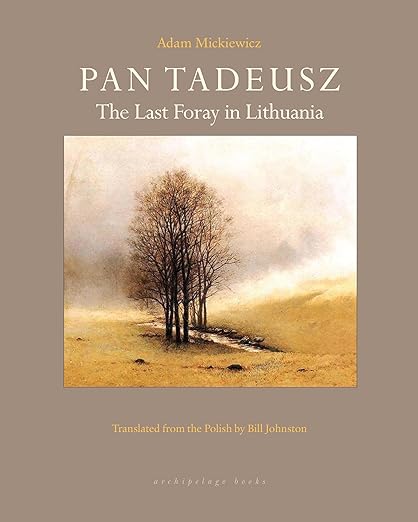
When my friend Bill Johnston was translating Adam Mickiewicz’s Pan Tadeusz, he talked about walking around town working on rhyming couplets for months on end. If he were to write the experience of crossing that daily threshold of obscurity from Polish into English into a novel, he would not be translating. He would be authoring.
 Russell Scott Valentino